

These pesky insects can cause more than just itchy bumps.1 Here are some safety tips for avoiding and managing bug bites.
Where can we get bug bites?
Mosquitoes are usually found around water. They especially like places with standing water, like pools and gutters.2 Another biting insect is called a sandfly (no-see-um). Sandflies are tiny and can fit through screens on doors. They are usually found around the beach or around mangrove trees.3,4 Both mosquitoes and sandflies are most active at dawn and dusk. Bug bites can happen any time during the year, but they are most common in warmer seasons.
What bit me?
Here’s how these bites may look or feel:
- Mosquitoes: mosquito bites appear as small, red, itchy bumps. They can also look like hives. Sometimes you will see a small dot in the center.2,5
- Sandflies (no-see-ums): sandfly bites can feel like a small stinging or burning sensation. There is usually a small red area around the bite. These bites are not as big as mosquito bites. You might see small clusters or groups of bites.3
My child was bitten. Now what?
Most bug bites will go away on their own. The most common symptoms are redness, swelling and itching around the bite.
Bug bite first aid focuses on keeping the area clean and treating symptoms.
Clean the bite with gentle soap and water.
If you can’t wash the bite right away, you can gently wipe it with rubbing alcohol or hydrogen peroxide. Avoid using too much of these as they can irritate skin.
Don’t scratch! Scratching can make the itching worse. Scratching also makes it easier for germs to infect the bite.2
Soaking a clean washcloth in cold water and applying it to the bite can help relieve itching.2
Calamine lotion and other over-the-counter anti-itch creams can also help your child feel more comfortable.2
For more intense itching, you can apply over-the-counter 1% hydrocortisone cream.2,5
If itching still doesn’t improve, you can try an over-the-counter antihistamine medicine, like diphenhydramine.2,5
Always follow instructions on medication labels.
When to see your child’s doctor
Bites can get infected or cause dangerous allergic reactions. If you notice the bite getting redder, larger or more swollen, see your child’s doctor right away. Seek emergency medical care immediately if your child develops:2,6,7
- red lines or yellowish fluid near the bite
- hives or itching over their whole body
- difficulty breathing, weakness or unconsciousness
- extreme swelling of the eyes, lips, tongue, throat or genitals
- any other symptoms that worry you
Some insects, like mosquitoes, can carry germs that make people sick.2 If your child feels unwell after a bite, with fever, chills, rashes or other symptoms, take them to their doctor.
How can I prevent bites?
There are lots of simple ways to make it harder for bugs to bite you!
Insect repellent sprays help keep bugs away before they can bite.8
For children 2 months and older, repellent with 20%-30% DEET is the best option to avoid bites.
You can spray over clothes or exposed skin.
Avoid spraying the face or palms, so no repellent ends up in eyes or mouths! To apply to your child’s face, spray repellent into your hands first.
Always apply sunscreen first, then insect repellent.
Avoid combined sunscreen and insect repellent.
Wash repellent off of skin with soap and water when back indoors.
Always read repellent labels and follow the instructions.6,8,9
Avoid the beach or wooded areas around dawn and dusk.2,4
Wear long pants and sleeves to help keep bugs away from skin.9
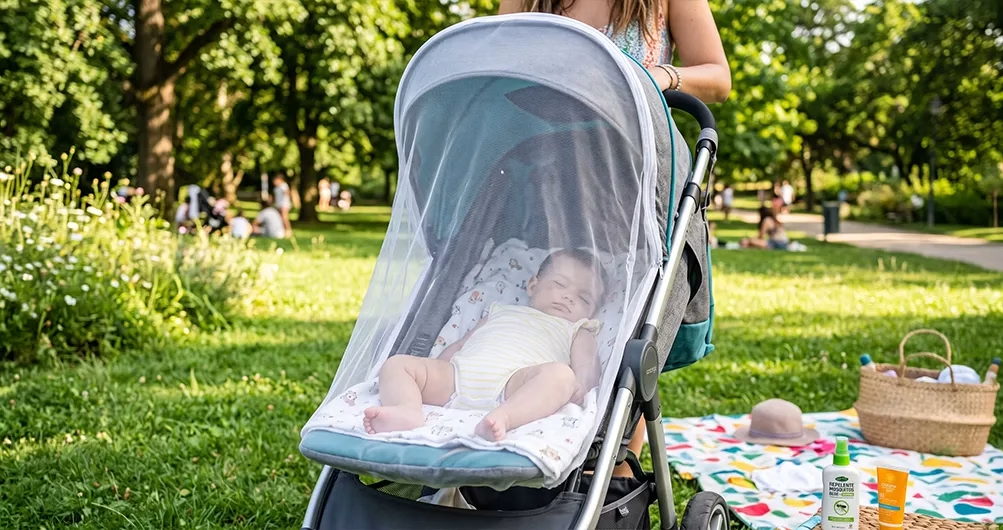
Cover strollers with mosquito netting when outside.6,8,9
Avoid scented products and bright or flowery-printed clothes that can attract insects.9
DEET dos and don’ts
- DEET is the best type of bug repellant to protect you against bug bites
- A higher percentage of DEET in a repellent means it will work longer. A spray with 10% DEET will protect you for about 2 hours. A spray with 30% will work for 5 hours.8
- Don’t use products with more than 30% on children.8
- Don’t apply DEET more than once a day.8
For more information about bug bite safety, call the Injury Free Coalition for Kids, a program of Jackson Hospital and University of Miami Funded by the Children’s Trust at 305-243-9080 or visit www.injuryfree.org.
- Citations
- Mutebi, J.-P. (2026, June 23). Miami-Dade Department of Solid Waste offers summertime tips for mosquito control. Miami-Dade County. MiamiDade.gov
- American Academy of Pediatrics. (2026, May 8). Insect bites & stings in children healthychildren.org
- Burkett-Cadena, N. D., et al. (2025, September 30). Biting midges, no-see-ums Culicoides spp. (Insecta: Diptera: Ceratopogonidae) (EENY 349/IN626). Ask.Ifas.Ufl.edu
- Infectious Disease Associates of Tampa Bay. (2024, August 5). Leishmaniasis and sandflies: What Floridians need to know. idatb.com
- Schmitt, B. (2017, June 24). Mosquito bite. HealthyChildren.org
- Children’s Hospital of Philadelphia. (n.d.). Keeping safe from bug-borne illnesses. Chop.edu. Accessed 2 Aug. 2026.
- Florida Department of Health. (2026, June 19). Lyme disease. FloridaHealth.gov
- American Academy of Pediatrics. (2024, January 10). Insect repellents. aap.org
- Balk, S. J. (2024, June 21). How to choose an insect repellent for your child. HealthyChildren.org


